
We all love our furry friends, but their accidents can be a problem. Pet waste health hazards are real. Our cleaning services get rid of these dangers.
At Lake Geneva Carpet Cleaning, we protect your family. Our truck-mounted hot water extraction removes dirt and odors. This method dries floors 5x faster than others.
Cleaning floors is more than just visible messes. Harmful germs can hide in rugs. We aim for total cleanliness to keep your family safe. Our tools reach every fiber to remove pollutants.
Enjoy your home without worries. We remove stains without leaving sticky residue. Our methods keep your home safe and clean for years. Choosing us means your property stays beautiful and healthy.
Key Takeaways
- Pathogens within carpets can trigger significant allergies.
- Surface scrubbing often fails to remove deep bacteria.
- Hot water extraction eliminates stains and odors efficiently.
- Our professional methods prevent sticky residue buildup.
- Fast drying times stop mold from growing within fibers.
- Deep cleaning ensures safer environments for families.
Understanding the Scope of Pet Waste Contamination in Lake Geneva Homes
Pet owners in Lake Geneva often don’t realize the risks of pet waste contamination in their homes. Pet accidents indoors are more common than people think. If not handled right, they can cause bigger health problems.
Pet waste, like urine and feces, can ruin carpets, upholstery, and other surfaces. It’s not just about bad smells. It’s also a serious health risk because of bacteria, viruses, and parasites.
To grasp how big this problem is, let’s look at some important stats and facts about pet waste contamination in homes.
| Contamination Factor | Impact on Home Environment | Health Risks |
|---|---|---|
| Pet Urine | Damages carpets and hardwood floors | Releases ammonia, worsening breathing problems |
| Pet Feces | Contaminates surfaces and soil | Contains pathogens like E. coli and Salmonella |
| Indoor Accidents | Increases risk of disease transmission | Can spread parasites and bacteria |
The table shows how pet waste contamination can harm both the home and its occupants’ health. Homeowners need to act fast to reduce these risks.
By knowing the extent of pet waste contamination, Lake Geneva residents can keep their homes and families safe. This means not just cleaning up right away but also finding ways to stop it from happening again.
How is Pet Urine & Feces a Health Risk in Lake Geneva Wi?
Pet waste in homes in Lake Geneva can be very harmful if not cleaned up right. It can spread bacteria and viruses on carpets and floors. This makes a perfect place for harmful germs to grow.
“Pet waste is full of bacteria, viruses, and parasites,” say health experts. These can spread to people, mainly in homes that don’t clean well. This can happen when people touch contaminated surfaces.
Direct Contact Hazards from Walking on Contaminated Carpets
Walking on carpets with pet waste can be very risky. The germs in pet waste can get on human skin. This can lead to infections.
Hookworms and roundworms can even go through the skin. This can cause many health problems.
Airborne Pathogens Released from Dried Pet Waste
Dried pet waste can turn into dust and spread germs in the air. When we breathe in these germs, it can hurt our lungs and cause other health issues. Especially in homes without good air flow, the air can get very dirty. This can make asthma worse.
Ammonia from pet urine is also a big worry. It can make our breathing, eyes, and skin hurt. This can lead to more health problems.
Risks to Children Sitting and Playing on Affected Surfaces
Children are very at risk from pet waste. They often sit and play on floors and carpets with pet waste. This makes them more likely to get sick.
Children’s immune systems are not strong enough to fight off these germs. They also tend to put their hands in their mouths. This can spread germs from surfaces to their bodies.
Bacterial Infections Caused by Pet Waste in Carpets
In Lake Geneva, Wisconsin, many pet owners don’t know about the dangers in pet waste-contaminated carpets. If not cleaned and disinfected well, pet waste can spread harmful bacteria in carpets.
These bacteria can lead to health problems, from mild stomach issues to serious infections. It’s important to understand the risks to keep your home healthy.
E. coli and Salmonella Contamination
E. coli and Salmonella are common in pet waste. They can cause severe stomach infections in people. E. coli can also cause urinary tract infections and pneumonia in some.
Salmonella infections can make you have diarrhea, fever, and stomach pain. These bacteria can stay on surfaces for a long time, making carpets a risk for infection.
Campylobacter and Other Harmful Bacteria
Besides E. coli and Salmonella, Campylobacter is also found in pet waste. It’s a big cause of diarrhea worldwide and is a big problem for young kids and people with weak immune systems.
Other bacteria, like Clostridioides difficile (C. diff), can also be present. They can cause severe diarrhea and colitis. This shows how important it is to clean and disinfect carpets well.
How Bacteria Survive Deep in Carpet Fibers
Bacteria from pet waste can get deep into carpet fibers, making them hard to clean. The moisture in carpets is perfect for bacteria to grow and stay alive.
The organic matter in pet waste feeds bacteria, helping them grow. So, carpets can stay a source of infection for a long time if not cleaned right.
Parasites and Pathogens Found in Pet Feces
It’s important to know about parasites and pathogens in pet feces to keep our homes clean. Pet waste can spread diseases, affecting both humans and pets in Lake Geneva.
Roundworms and Hookworms
Roundworms and hookworms are common in pet feces. They can cause health problems like stomach issues and even anemia. Roundworms can move through the body and infect organs. Hookworms attach to the intestines and feed on blood, causing chronic blood loss.
These parasites can spread through contact with contaminated soil or feces. Kids are at high risk because they often touch their mouths and play where pets may have gone to the bathroom.
Giardia and Cryptosporidium
Giardia and Cryptosporidium are protozoan parasites that cause stomach problems in humans. They are tough and can live outside a host for a long time. Giardiasis from Giardia can cause diarrhea, stomach pain, and weight loss. Cryptosporidiosis from Cryptosporidium can lead to severe diarrhea and dehydration, mainly in people with weak immune systems.
These pathogens can spread through contaminated water, food, or direct contact with infected feces. It’s key to dispose of pet waste properly and clean contaminated areas regularly.
Toxoplasma gondii Risks for Pregnant Women
Toxoplasma gondii is a parasite that poses big risks to pregnant women. Infection can cause serious health issues in newborns. Pregnant women should avoid cat litter and contaminated soil or feces.
This shows how important it is to manage pet waste and keep clean, for the safety of pregnant women and others at risk.
| Parasite/Pathogen | Health Risks | Transmission Methods |
|---|---|---|
| Roundworms | Gastrointestinal issues, organ infections | Contact with contaminated soil or feces |
| Hookworms | Anemia, malnutrition, chronic blood loss | Contact with contaminated soil or feces |
| Giardia | Diarrhea, abdominal cramps, weight loss | Contaminated water, food, or direct contact with infected feces |
| Cryptosporidium | Severe diarrhea, dehydration | Contaminated water, food, or direct contact with infected feces |
| Toxoplasma gondii | Congenital toxoplasmosis in newborns | Handling cat litter, contact with contaminated soil or feces |
Respiratory Health Risks from Pet Urine Ammonia
Ammonia gas from pet urine is a hidden danger that can severely impact respiratory health. When pet urine breaks down, it releases ammonia gas into the air. This gas can cause a range of respiratory issues, from mild irritation to severe conditions.
Ammonia Gas Formation and Inhalation Dangers
The breakdown of urea in pet urine leads to the formation of ammonia gas. This process occurs when bacteria come into contact with the urine, breaking it down and releasing ammonia as a byproduct. Inhaling ammonia gas can irritate the respiratory tract, causing symptoms such as coughing, wheezing, and shortness of breath.
Key dangers of ammonia gas inhalation include:
- Irritation of the eyes, nose, and throat
- Coughing and wheezing
- Shortness of breath
- Potential damage to lung tissues with prolonged exposure
Impact on Asthma and Allergies
For individuals with pre-existing respiratory conditions like asthma or allergies, exposure to ammonia gas from pet urine can exacerbate symptoms. Asthma attacks can be triggered, and allergic reactions may become more severe. It’s vital for pet owners with respiratory issues to be aware of these risks and take appropriate measures.
Some of the ways ammonia affects asthma and allergies include:
- Increasing airway inflammation
- Triggering asthma attacks
- Enhancing allergic reactions
Long-Term Respiratory Complications
Prolonged exposure to ammonia gas from pet urine can lead to long-term respiratory complications. Chronic respiratory conditions may develop, and existing conditions can worsen over time. It’s essential to mitigate the risks associated with pet urine to protect long-term respiratory health.
Potential long-term effects include:
- Chronic bronchitis
- Persistent coughing
- Reduced lung function
Allergic Reactions and Immune System Responses to Pet Waste
It’s important to know how pet waste can cause allergic reactions. This is key to keeping our homes clean and healthy. Pet waste can be a strong allergen, affecting our breathing, skin, and immune system.
Pet Waste as an Allergen Trigger
Pet waste has proteins that can turn into dust and be breathed in. This can start allergic reactions. These proteins can also land on surfaces, making them a risk for skin contact or accidental ingestion.
Common allergic reactions to pet waste include:
- Respiratory issues such as sneezing and congestion
- Skin irritations and dermatitis
- Eye irritation and redness
Health experts say that pet waste can cause a variety of allergic reactions. These can range from mild to severe health problems.
“The proteins present in pet waste are highly allergenic and can cause significant health problems in sensitive individuals.”
Skin Irritations and Contact Dermatitis
Touching pet waste can cause skin irritations and contact dermatitis. This happens when the skin reacts to the proteins and bacteria in the waste.
| Skin Condition | Symptoms | Causes |
|---|---|---|
| Contact Dermatitis | Redness, itching, blisters | Direct skin contact with pet waste |
| Skin Irritation | Redness, inflammation | Proteins and bacteria in pet waste |
To avoid these problems, we must handle pet waste carefully and keep our spaces clean. Regular cleaning and proper disposal of pet waste can greatly lower the risk of allergic reactions.

By understanding the dangers of pet waste and taking action, we can keep ourselves and our loved ones healthy.
Special Health Risks for Children and Infants
Pet waste is a big health risk for kids and babies in Lake Geneva, WI. Young children are very vulnerable to getting sick from pet waste. This is because their immune systems are not fully developed and they like to play on floors and put things in their mouths.
Why Children Are More Vulnerable to Pet Waste Contamination
Children are more likely to get sick from pet waste because of their developing immune systems. They also tend to touch and taste things, which can expose them to harmful germs. This curiosity and exploration make them more at risk.
Hand-to-mouth contact is a big problem for young kids. They often put their hands or toys in their mouths after touching contaminated surfaces or pet waste. This is a main way germs spread.
Hand-to-Mouth Contact and Infection Routes
When kids put things in their mouths after touching dirty surfaces or pet waste, they can get very sick. E. coli, Salmonella, and Campylobacter are just a few bacteria that can cause serious stomach problems in kids.
It’s very important for kids to wash their hands often. But, pet waste on carpets and surfaces makes it hard to keep things clean. It can keep spreading germs.
Developmental Health Concerns in Young Children
Being around pet waste can harm kids’ health in the long run. Respiratory issues, allergies, and developmental delays are some of the risks. Keeping their environment clean is key for their health and growth.
Some germs, like Toxoplasma gondii, are very dangerous, even for pregnant women and their babies. It’s important to know about these risks and take steps to avoid them.
Indoor Air Quality Degradation from Pet Waste
Pet waste is a big problem for indoor air quality in Lake Geneva. It can harm the health of everyone in the house. Pet waste can make indoor air worse in many ways.
How Pet Odors Indicate Serious Health Hazards
Pet odors are not just annoying; they can be dangerous. These smells come from pet waste breaking down. This releases bad gases and particles into the air.
Pet odors can signal the presence of harmful pathogens that can become airborne. These pathogens can be breathed in by family members. This can cause breathing problems and other health issues.
Volatile Organic Compounds Released from Urine
Pet urine is a big source of volatile organic compounds (VOCs) in homes. When pet urine dries, it releases ammonia and other VOCs. This makes indoor air pollution worse.
The VOCs from pet urine can cause health problems. This includes breathing irritation and other issues. It’s important to clean up pet urine accidents fast to reduce VOCs.
| Health Risk | Source | Impact |
|---|---|---|
| Respiratory Issues | Pet waste and urine | Indoor air quality degradation |
| Pathogen Exposure | Pet feces | Increased risk of infections |
| VOC Exposure | Pet urine | Respiratory irritation and other health issues |
Disease Transmission Pathways in Wisconsin Homes
In Wisconsin homes, pet waste can lead to various disease transmission pathways that pose significant health risks. Pet waste contains a multitude of pathogens, including bacteria, viruses, and parasites, which can be transmitted to humans through different routes.
Direct Contact Transmission Methods
Direct contact with pet waste is a primary mode of disease transmission. When individuals come into contact with contaminated surfaces or directly handle pet waste without proper hygiene practices, they can inadvertently ingest pathogens. For example, not washing hands after handling pet waste or touching contaminated surfaces can lead to the transmission of harmful bacteria like E. coli and Salmonella.
Children are more at risk due to their frequent hand-to-mouth activity and playing on floors and surfaces that may be contaminated with pet waste.
Airborne Transmission Through HVAC Systems
Airborne transmission of pathogens from pet waste can occur when contaminated particles become aerosolized and are circulated through heating, ventilation, and air conditioning (HVAC) systems. When pet waste dries, it can become airborne and be inhaled, potentially leading to respiratory issues or the transmission of diseases.
Health experts note that indoor air quality can be significantly compromised by pet waste, leading to health risks in homes with inadequate ventilation.
“The circulation of contaminated air through HVAC systems can spread pathogens throughout a home, increasing the risk of disease transmission to occupants.”
Cross-Contamination to Other Surfaces
Cross-contamination occurs when pathogens from pet waste are transferred to other surfaces within the home. This can happen through various means, such as on footwear, clothing, or cleaning tools that come into contact with contaminated areas and then touch other surfaces.
For instance, if a pet has an accident on the carpet and it’s not properly cleaned, the bacteria or viruses can be transferred to other parts of the home, including furniture, countertops, and other areas where people spend time.
Understanding these disease transmission pathways is key for homeowners in Wisconsin to take appropriate measures to mitigate the risks associated with pet waste. By being aware of the health hazards and taking proactive steps, such as regular cleaning and proper hygiene practices, homeowners can significantly reduce the risk of disease transmission in their homes.
How to Prevent Pet Waste Health Hazards in Your Lake Geneva Home
To keep your Lake Geneva home safe from pet waste, you need to clean up right away, deep clean often, train your pets, and protect key areas. These steps can greatly lower the risks from pet waste.
Step 1: Implement Immediate Cleanup Protocols
Cleaning up fast is key to stop bacteria and smells from spreading. Use paper towels or cloths to soak up as much waste as you can. Then, clean the area well with a safe cleaner for pets.
Key actions for immediate cleanup:
- Act quickly to minimize the spread of contaminants.
- Use absorbent materials to soak up the waste.
- Clean the area with a suitable detergent.
Step 2: Establish Regular Deep Cleaning Schedules
Deep cleaning is vital to get rid of dirt and bacteria deep in carpets and upholstery. Plan deep cleans twice a year, or more if you have many pets.
Benefits of regular deep cleaning include:
- Removal of deep-seated dirt and bacteria.
- Reduction in pet odors.
- Extension of carpet and upholstery lifespan.
Step 3: Train Pets and Manage Behavior
Teaching your pets to go in specific spots can cut down on messes. Stick to a routine and reward good behavior to train them well.
| Training Tips | Benefits |
|---|---|
| Designate specific potty areas. | Reduces accidents in the home. |
| Use positive reinforcement. | Encourages good behavior. |
| Be consistent. | Helps pets understand expectations. |
Step 4: Protect High-Risk Areas in Your Home
Pay extra attention to areas like pet beds, favorite spots, and near food and water. Use washable covers and disinfect these spots often to lower risks.
Why DIY Cleaning Methods Fall Short for Pet Waste Removal
Getting pet waste out of carpets is tough. DIY methods are popular but have big limits. In Lake Geneva, WI, pet owners struggle to get rid of stains and smells from accidents. DIY cleaning often doesn’t solve these problems fully.
Surface-Level Cleaning Limitations
DIY cleaning mainly cleans the surface. It might get rid of the stain but misses the deeper contamination. Pet waste can get deep into carpet fibers, making DIY cleaning hard to fully remove waste and smells. Our experience shows that surface cleaning can leave behind harmful residues.
Residue Problems with Store-Bought Products
Many cleaning products from stores leave residues that attract dirt and dust. This makes the carpet look dirty again soon after cleaning. Some products don’t handle pet waste well, failing to remove odors and kill bacteria. Using the wrong products can make things worse, not better.
The Hidden Contamination Below Carpet Surface
DIY cleaning can’t reach contamination deep in the carpet. Pet waste can get into the padding and subfloor, causing smells and health risks. Our truck-mounted hot water extraction process targets this deep contamination for a deeper clean. It also means your carpets dry up to 5x faster, avoiding mold and other issues.
Knowing DIY cleaning’s limits helps pet owners in Lake Geneva, WI, choose better. Professional carpet cleaning offers a deeper solution to this common problem.
Professional Carpet Cleaning Solutions for Pet Waste in Lake Geneva
Removing pet waste from your carpet in Lake Geneva needs professional help. Pet waste can cause stubborn stains, bad smells, and health risks if not cleaned right.
Truck-Mounted Hot Water Extraction Technology
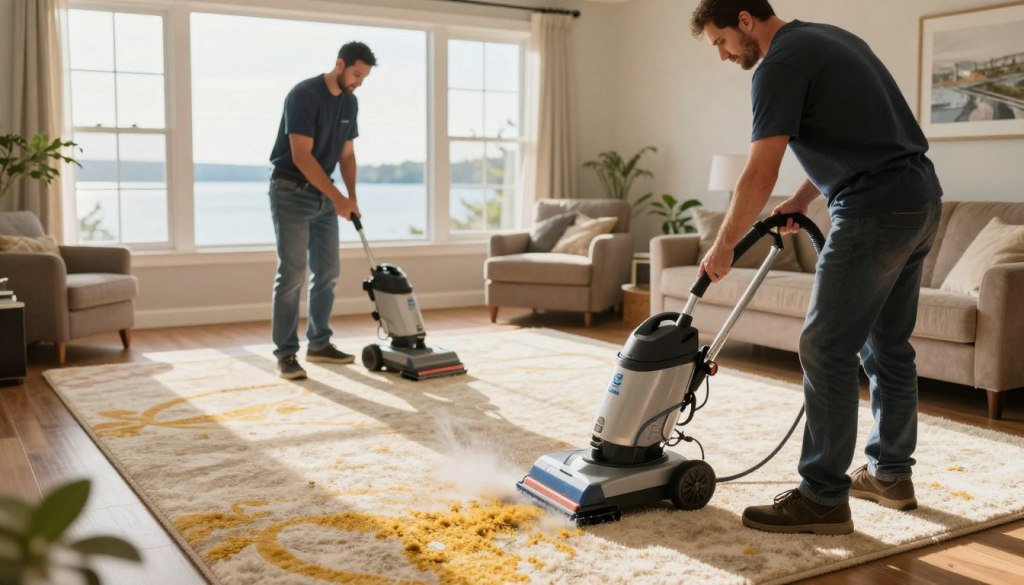
We use truck-mounted hot water extraction technology for deep cleaning. This method injects hot water and cleaning solution into the carpet. Then, it sucks out the dirty water and dirt back into the truck.
This method cleans not just the visible stains but also kills bacteria and viruses deep in the carpet.
Expert Pet Spot and Odor Removal Process
Our team knows the latest in pet spot and odor removal. We adjust our cleaning to fit your carpet’s needs. Whether it’s urine, feces, or vomit, we can handle it.
No-Residue Cleaning for Healthier Homes
We promise no-residue cleaning. Our solutions break down dirt without leaving harmful residues. This makes your home clean and healthy for your family.
Fast-Drying Results to Prevent Mold Growth
Cleaning pet waste fast is important to us. Our fast-drying process gets your carpets dry quickly. This prevents mold growth.
Why Our Carpets Dry Up to 5 Times Faster
Our technology extracts water from the carpet, drying it faster than other methods. This means your carpets dry in 2-4 hours.
| Cleaning Method | Drying Time |
|---|---|
| Truck-Mounted Hot Water Extraction | 2-4 hours |
| Traditional Carpet Cleaning | 10-24 hours |
Safe for Kids and Pets Formulations
We care about your family’s health, including pets. That’s why our cleaning solutions are safe for kids and pets.
Our products are non-toxic and gentle on surfaces. They’re tough on dirt and contaminants.
When to Call Lake Geneva Carpet Cleaning Professionals at 262-581-6140
If you see constant pet odors or stains at home, it’s time to call 262-581-6140. Pet waste can be very harmful if not cleaned right.
Warning Signs Your Carpets Need Professional Attention
There are clear signs your carpets need a pro cleaning. Look out for:
- Persistent odors that linger despite regular cleaning
- Visible stains or discoloration
- Allergy symptoms or respiratory issues that may be exacerbated by dirty carpets
- A noticeable decline in indoor air quality
Ignoring these signs can lead to long-term health consequences and a decrease in your home’s cleanliness.
What to Expect from Our Expert Service
Our Lake Geneva carpet cleaning pros use the latest tech for a deep clean. We offer:
- Truck-mounted hot water extraction technology for deep cleaning
- Expert pet spot and odor removal processes
- No-residue cleaning for a healthier home environment
- Fast-drying results to prevent mold growth
We pride ourselves on providing honest pricing and no-obligation quotes, ensuring you get the best service without any surprises.
How to Get Your Free No-Obligation Quote
Getting a quote is easy. Just call us at 262-581-6140, and our friendly team will give you a quote that fits your needs. We offer competitive pricing and flexible scheduling to fit your busy life.
Conclusion
Pet waste health hazards are a big problem for Lake Geneva residents. Pet urine and feces can make carpets dirty. This releases harmful germs and allergens into the air we breathe.
The dangers of pet waste in Lake Geneva are serious. They can cause bacterial infections and breathing problems. It’s important to act fast to keep our homes safe and healthy.
Professional carpet cleaning is key to removing pet waste dangers. Our team uses special equipment to deep clean carpets. This gets rid of hidden germs.
We must understand the risks of pet waste and take action. This will protect our homes and families. We urge Lake Geneva residents to keep their homes safe from pet waste dangers.
For a cleaner, healthier home, think about our carpet cleaning services. Call us at 262-581-6140 to book your appointment. Start making your home a safer place today.
[…] Read more about the health risks at https://lakegenevacarpetcleaning.com/2026/03/15/how-is-pet-urine-feces-a-health-risk-in-lake-geneva-… […]